
Compact 5300 vs Compact 5500
Which Philips Ultrasound System Is Right for Your Practice?
The Philips Compact 5300 and Philips Compact 5500 are portable ultrasound systems designed to deliver high-quality imaging performance in flexible clinical environments. Both systems utilize Philips Compact platform technology and support streamlined workflows, portability, and multi-specialty imaging applications. While the Compact 5300 is designed as a practical portable ultrasound solution for routine imaging needs, the Compact 5500 provides enhanced imaging capabilities and expanded clinical versatility for more demanding diagnostic applications.
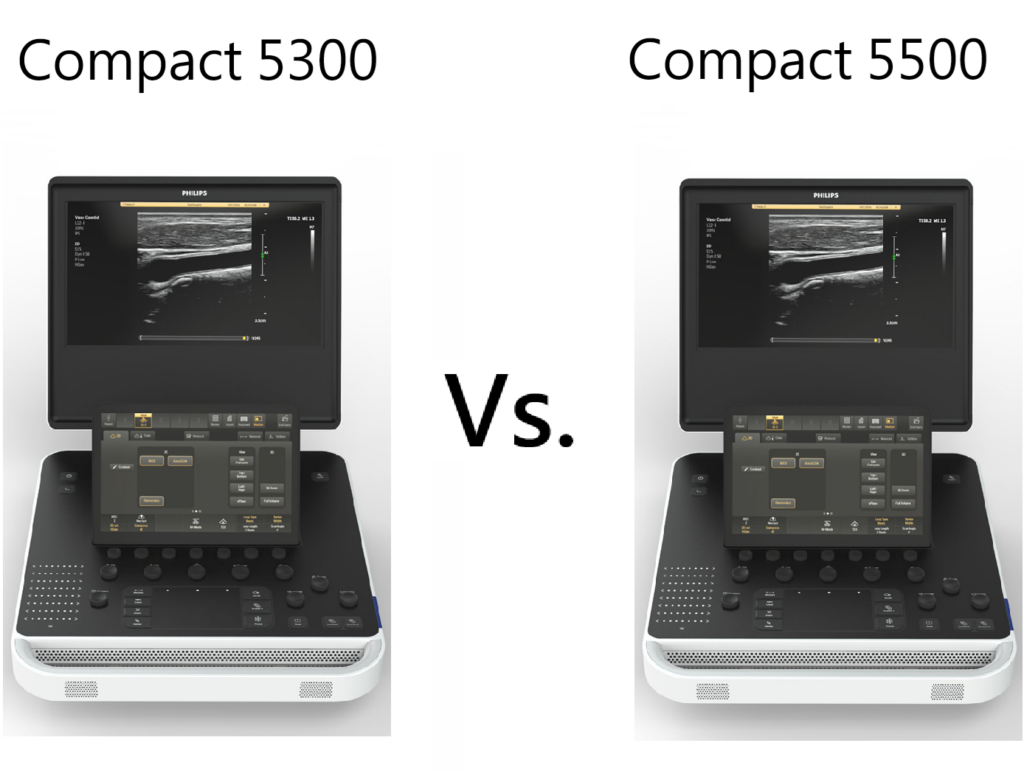
Key Differences Between the Compact 5300 and Compact 5500
The Compact 5300 is designed to provide dependable portable imaging performance with efficient workflows and broad clinical usability. The Compact 5500 expands upon the platform with additional imaging technologies, enhanced workflow features, and broader support for advanced diagnostic imaging applications.
Compact 5300 Highlights
- Portable ultrasound platform
- Streamlined workflow design
- Reliable general imaging performance
- Compact ergonomic system design
- Suitable for routine imaging environments
Compact 5500 Highlights
- Enhanced imaging optimization
- Expanded clinical application support
- Advanced workflow features
- Improved imaging clarity
- Greater flexibility for demanding clinical environments
Imaging Performance Comparison
Both systems utilize Philips ultrasound imaging technologies designed to support workflow efficiency and diagnostic confidence. However, the Compact 5500 includes additional imaging enhancements and broader clinical capabilities compared to the Compact 5300.
The Compact 5300 is commonly used for:
- General imaging
- Point-of-care ultrasound
- Portable imaging workflows
- Routine diagnostic applications
- Shared-service clinical environments
The Compact 5500 is frequently selected for:
- Advanced portable imaging
- Higher patient-volume environments
- Multi-specialty diagnostic imaging
- Vascular imaging applications
- Expanded clinical workflow requirements
Healthcare providers seeking a reliable and portable ultrasound solution may find the Compact 5300 well suited for routine imaging needs, while facilities requiring broader clinical flexibility and enhanced imaging performance may prefer the Compact 5500.
Workflow and Portability
Both systems feature Philips workflow architecture designed to improve efficiency and simplify operation in portable imaging environments. Ergonomic controls, touchscreen functionality, and compact designs support mobility and efficient scanning workflows across multiple clinical settings.
The Compact 5300 emphasizes simplicity and portability for routine imaging applications, while the Compact 5500 includes expanded workflow tools and imaging enhancements intended for more advanced diagnostic environments.
Who Should Choose the Compact 5300
The Philips Compact 5300 may be a strong choice for:
- Portable imaging environments
- Point-of-care ultrasound applications
- Smaller clinics
- Shared-service healthcare settings
- Facilities prioritizing portability and workflow simplicity
Its balance of portability, usability, and dependable imaging performance makes it suitable for routine diagnostic imaging applications.
Who Should Choose the Compact 5500
The Philips Compact 5500 is often better suited for:
- Higher patient-volume environments
- Advanced portable imaging workflows
- Multi-specialty healthcare facilities
- Vascular imaging applications
- Practices requiring enhanced imaging flexibility
Its expanded clinical capabilities and enhanced imaging technologies support more demanding portable ultrasound workflows.
Compact 5300 vs Compact 5500 Specifications Overview
| Feature | Compact 5300 | Compact 5500 |
| Primary Focus | Portable Routine Imaging | Advanced Portable Imaging |
| Portability | Excellent | Excellent |
| Workflow Efficiency | Strong | Advanced |
| Imaging Optimization | Standard | Enhanced |
| Vascular Imaging | Supported | Strong |
| Shared-Service Use | Excellent | Excellent |
| Clinical Flexibility | Moderate | High |
Related Philips Ultrasound Systems
Frequently Asked Questions
What is the main difference between the Compact 5300 and Compact 5500?
The Compact 5500 offers enhanced imaging performance, expanded workflow tools, and broader clinical flexibility compared to the Compact 5300.
Is the Compact 5300 suitable for portable imaging?
Yes. The Compact 5300 is designed specifically for portable imaging workflows and routine diagnostic applications.
Does the Compact 5500 support advanced imaging applications?
Yes. The Compact 5500 is commonly used for advanced portable imaging and multi-specialty diagnostic environments.
Are refurbished Compact 5300 and Compact 5500 systems available?
Yes. Both systems are commonly available as refurbished ultrasound systems with various configuration and transducer options.
Request Pricing or Additional Information
Healthcare providers evaluating the Philips Compact 5300 and Compact 5500 ultrasound systems can request additional information, available configurations, and pricing options based on their clinical requirements.
Contact us for pricing and availability on Philips Compact ultrasound systems.
Source: Philips Ultrasound